
Why the Ten Commandments Ground AI Ethics
Prolegomena for Ethics

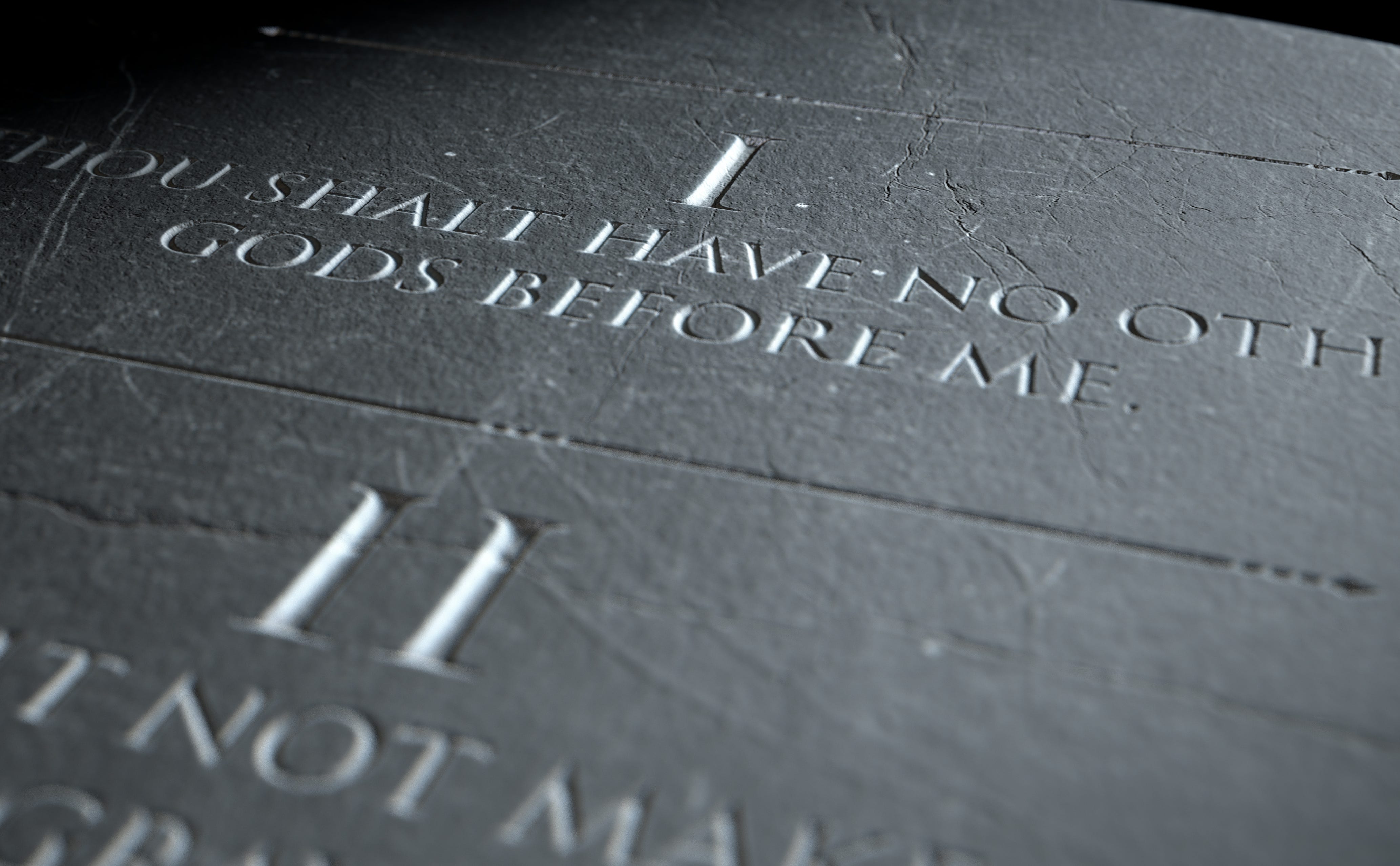
AI systems increasingly influence decisions about hiring, lending, medical diagnoses, and military targeting. The emerging field of AI ethics typically focuses on applied questions: fairness, transparency, and accountability. But applied ethics rests on normative commitments, and normative ethics requires a foundation. The deeper question is: What grounds moral obligation? This essay contends that the answer is found in God's self-revelation as expressed in the Decalogue.
Historically, three schools of thought have attempted to provide that foundation: Kantian deontology, virtue ethics, and utilitarianism.1 Each offers insights. Kantians focus on what rules should guide AI. Virtue ethicists consider what character developers should have. Utilitarians look at which outcomes AI should aim for. But why start with one rather than another? The choice itself requires justification.
The Need for Prolegomena
A theological ethics for AI requires a foundation. Kant recognized this need in his Prolegomena to Any Future Metaphysics.2 Theologians proceed the same way. Before doctrine comes prolegomena: How does God reveal Himself? How do we reason from revelation? Without answering these first, we build on assumptions we have not examined.
For Christians, ethics begins with God.3 Herman Bavinck frames the central question: “what it is that God now expects of us when he does his work in us.”4 Our aim is to understand what God asks of us in light of his work through Christ. The church has long based its teaching on virtues and duties on the Ten Commandments. From Augustine to Luther, Calvin, and the Westminster divines, moral instruction has centered on the Decalogue. John Murray, in Principles of Conduct, calls it the permanent standard for ethical life.5 Most importantly, the New Testament affirms this pattern. Jesus summarizes the law in terms of love for God and neighbor (Matthew 22:37-40). Paul declares “the law is holy, and the commandment is holy and righteous and good” (Romans 7:12). James calls it “the perfect law, the law of liberty” (James 1:25). Moreover, the New Testament cites specific commandments: Jesus recites “Do not murder, Do not commit adultery, Do not steal” (Luke 18:20), and Paul writes, “The commandments... are summed up in this word: ‘You shall love your neighbor as yourself’” (Romans 13:9).
However, not all Christians agree on how the Decalogue applies today; some view the commandments as superseded by the new covenant. I cannot address all these disputes here but will proceed with the Reformed tradition, which holds that the Decalogue remains applicable because it reveals God’s unchanging character (see WCF 19.5; Heidelberg Catechism Q. 115). A Decalogue for AI proceeds from this conviction.
Still, while the Decalogue of AI is meant for those who affirm the Trinitarian God of the Nicene Creed, those who don’t may find it useful. Paul tells us that God’s law is written on human hearts, so that even those without Scripture show the work of the law (Romans 2:14-15; cf. Romans 1:32).6 A theological approach to AI ethics often aligns in practice with Kantian, virtue, and utilitarian conclusions. The difference is the foundation, not always the outcome. I invite these readers to consider whether ethics grounded in divine revelation can offer the unity that other approaches lack.
The Failure of Autonomous Ethics
Why does foundation matter? Because worldview shapes ethics. As Herman Bavinck argues in Christian Worldview, how we see reality determines how we act within it.7 A materialist worldview yields one set of ethical commitments; a Christian worldview yields another. If the universe is impersonal matter in motion, then ethics becomes a human construction, useful perhaps, but ultimately arbitrary. If the universe is the creation of a personal, triune God who speaks, then ethics is grounded in His character and revealed in His word. Autonomous reasoning, rooted in natural philosophy and revived by the Enlightenment, makes human reason its own starting point, independent of divine revelation.8
For example, Kantian ethics focuses on rules and duties: AI systems should respect human dignity. But Kant does not explain why dignity matters. He bases it on rational autonomy: humans deserve respect because they are rational. But reason justifying itself is circular. Only a self-existent God can be self-grounded. As Frame observes, God is “the inescapable norm for human reason.”9
Alternatively, utilitarianism looks at outcomes: AI should increase well-being and reduce harm. This approach is common in the tech industry, where algorithms are judged by metrics and A/B testing shapes features. “Responsible AI” has become an industry term for AI that brings measurable benefits. Utilitarianism cannot explain why flourishing matters, whose well-being counts most, or how to weigh present costs against future benefits.
Finally, virtue ethics asks what kind of people we should be. Applied to AI, virtue ethicists would have developers cultivate wisdom, justice, and prudence. But which virtues matter most? For Aristotle, the person of practical wisdom serves as the standard (Nicomachean Ethics VI.5): What would the phronimos do? But who qualifies as phronimos? Virtue ethics relies on tradition and community for answers. Silicon Valley and the Amish would value different virtues. Without a higher standard, virtue becomes whatever a community values.
These frameworks share a common failure: they presuppose what only revelation provides. Utilitarianism assumes flourishing matters. Deontology assumes duties bind. Virtue ethics assumes character has a telos. But no one can say why. Moreover, each taken by itself becomes truncated. Deontological ethics, for example, can reduce to mere rule-keeping with no attention to human flourishing, the very thing Jesus rebukes in Luke 13:15-17. The proliferation of competing "AI ethics principles" confirms the absence of shared ground. The foundation is missing. What would it look like to begin with God's self-revelation?
The Glory as Foundation
Christian ethics offers a foundation that secular approaches lack. At Sinai, God makes the foundation explicit. When Moses asked to see God’s glory, he made the boldest request in Scripture: “Please show me your glory” (Exodus 33:18). This came after Israel’s catastrophic failure with the golden calf. At the burning bush God revealed His name; at Sinai, thunder and lightning revealed His majesty. But here, in the wake of Israel’s betrayal, God reveals His covenant character. God’s response was a proclamation of His name and character:
“The LORD, the LORD, a God merciful and gracious, slow to anger, and abounding in steadfast love and faithfulness, keeping steadfast love for thousands, forgiving iniquity and transgression and sin, but who will by no means clear the guilty.” (Exodus 34:6-7)
Israel obeys not to earn God’s favor but because God has shown who He is. This pattern begins in Exodus 20:1-2, where God’s self-identification grounds the commands that follow. After Israel’s covenant breach, the glory theophany of Exodus 33-34 deepens and renews that foundation. God reveals His kavod, His weight and substance, as the basis for renewal. The same God who judged their idolatry now proclaims Himself merciful and gracious, abounding in covenant love. The indicative grounds the imperative. We obey because God has made Himself known.
The glory and the law are inseparable. The law is the glory made ethical: the divine character rendered as moral instruction for image-bearers (Psalm 119:137). Each commandment reveals something essential about who God is:
“You shall have no other gods before me” reflects God’s sole deity.
“You shall not make for yourself a carved image” also reflects His exclusivity: God alone determines how He is represented.
“You shall not take the name of the LORD your God in vain” protects His sacred name, because His name is His character.
“Remember the Sabbath” reflects God’s creative rhythm and lordship over time.
“Honor your father and mother” reflects God’s authority, granted subordinately to human authorities.
“You shall not murder” reflects God’s nature as the author of life.
“You shall not commit adultery” reflects His covenant faithfulness.
“You shall not steal” reflects His justice.
“You shall not bear false witness” reflects His truth.
“You shall not covet” reflects His sufficiency and goodness.
We are called to reflect the character of the One whose image we bear. The Decalogue shows us what that reflection looks like: a portrait of divine character, not merely a list of prohibitions. To violate the commandments is not merely to break rules but to contradict the character of God himself.
Doxological Ethics
I call this framework doxological ethics: the conviction that moral obligation is grounded in God’s character, governed by God’s law, and aimed at God’s glory. This is the Decalogue.
The term derives from doxa, the Greek word for glory, weight, and radiant self-manifestation. Reformed theologians have long recognized that ethics is oriented toward God’s glory. But here I use the term to name a specific framework: ethics rooted in the glory-law connection that runs from Exodus 20:1-2 through the glory theophany of Exodus 33-34. Not ethics constructed by humans, negotiated among competing preferences. But ethics as disclosure: who God is and what He requires of creatures made in His image.
The Westminster Larger Catechism grasps this. Its preface to the commandments (Q. 101) teaches that obligation flows from identity: “because God is the Lord, and our God, and Redeemer, therefore we are bound to keep all his commandments.” This alludes to the covenantal self-identification of Exodus 20:1-2, the same divine character that Exodus 33-34 reveals in its fullness. The indicative grounds the imperative. We obey not to earn God’s favor but because He has revealed who He is.
The Decalogue’s very structure confirms this. It follows the pattern of ancient covenant treaties: preamble (”I am the LORD”), historical prologue (”who brought you out of Egypt”), and stipulations (the commandments). In Hebrew thought, the law is not abstract philosophy but covenant language: the terms of loyal love between Lord and people.
Doxological ethics offers what theologian John Frame calls a triperspectival approach, theological ethics in three dimensions:10
The goal is God’s glory. Ethics aims at reflecting the One in whose image we are made. For AI, this means human flourishing is not the ultimate end but a means to a greater one.
The standard is God’s law. The Decalogue reveals what God requires. For AI, this means ethics has content, not just procedure.
The motive is love for God and neighbor. Moral obligation is personal, not mechanical. For AI, this means technology answers to persons, not abstractions.
Goal, standard, and motive correspond to the situational (what goal are we pursuing), the normative (what standard governs us), and the existential (what motivates us). God’s character grounds all three. In God, the three coalesce: His character is the standard, His glory is the goal, and His nature is the motive from which all His acts proceed.
The Logos as Confirmation
Doxological ethics finds its ultimate confirmation in the New Testament. The apostle John’s Prologue declares that the glory Moses saw finds its fullest expression in Christ. “The Word became flesh and dwelt among us, and we have seen his glory, glory as of the only Son from the Father, full of grace and truth” (John 1:14). The phrase “grace and truth” directly echoes Exodus 34:6: “abounding in steadfast love and faithfulness.” These are covenant terms describing God’s character. John uses the Greek equivalent to signal continuity: the God who revealed His glory to Moses has now revealed it fully in Christ.11
The Logos who spoke at Sinai is the Logos who became flesh. “In the beginning was the Word, and the Word was with God, and the Word was God. All things were made through him” (John 1:1-3). The Logos grounds each perspective of doxological ethics: situationally, He is the source of all being, so we cannot answer “What is AI?” without considering the Creator. Normatively, He is "the true light that gives light to everyone" (John 1:9), the source and standard of knowing. Apart from Him, knowledge has no foundation. Existentially, the Light shines in the darkness and demands response (John 1:12). Practitioners, developers, and users remain morally accountable. Responsibility cannot be deferred to algorithms.
Applying the Triad
The Westminster Larger Catechism teaches that “the law is perfect” (Q. 95; cf. Psalm 19:7) and that each commandment contains both prohibitions and positive duties (Q. 99). What is forbidden implies what is required; what is required implies what is forbidden (WLC Q. 99, Rule 4). This hermeneutical principle allows the Decalogue to address situations far beyond Sinai: in the Old Testament, in the New Testament, and now in the age of artificial intelligence.
The triad (goal, standard, motive) keeps us from treating technical, business, and ethical concerns as separate silos. This is why the essays that follow in this publication will apply each commandment to AI ethics.
Turing’s Theological Objection: A Case Study
Alan Turing’s 1950 paper anticipated what he called “The Theological Objection” to machine intelligence: “Thinking is a function of man’s immortal soul. God has given an immortal soul to every man and woman, but not to any other animal or to machines.”12 Turing was a principal contributor to the theory of computation, and his brilliance reflects gifts of God’s common grace. Yet even the brilliant can mistake a part for the whole. Turing’s approach was heavily situational and pragmatic: if a machine can perform the same tasks as a human, it is functionally equivalent. Yet technical mastery is not the same as wisdom.
Turing’s dismissal was swift: the objection “implies a serious restriction of the omnipotence of the Almighty” by suggesting God cannot grant souls to machines if He wishes. But his response reveals the very fragmentation it ignores: he separates what machines are from the ethics of building them.
How would doxological ethics respond?
Situational: The question is not whether God could give a soul to a machine as a theoretical possibility, but what machines actually are within the created order. God’s character as Creator establishes a clear line between Himself and creation that technology cannot cross. Machines are made by humans and are twice removed from the original source of being. Humans alone bear the imago Dei, a status conferred by the Creator, not a capacity that can be engineered.
Normative: God’s law reveals what Turing’s test cannot measure: humans bear His image through capacities such as language, conscience, communion, and moral accountability before God. The key question is not whether machines can pass behavioral tests but whether their processes truly share in divine rationality or merely imitate its outward signs. The Decalogue, which reveals God’s character, provides the standard for evaluating what we make and why.
Existential: The motive for making must be love for God and neighbor, not technological ambition. Making machine “intelligence” raises questions about our accountability before God. Not everything that can be built ought to be built. The secular mind assumes that capability implies permission. Doxological ethics asks the prior question: What forms of making honor the Creator?
Doxological ethics holds together what Turing’s response fragmented. The question is not “Can machines think?” but “What does faithful making look like in light of God’s glory?”
Turing dismissed the theological objection and asked whether machines can think. But the question cannot be isolated from the foundational ones: What exists? How is knowledge possible? What should we do? These three are united in the glory of God revealed at Sinai and incarnate in Christ.
Doxological ethics provides what secular approaches cannot. The goal is God’s glory. The standard is God’s law. The motive is love for God and neighbor. And God’s character grounds them all. The Decalogue applies to AI not because we are proof-texting ancient commands but because it reveals the unchanging character of God. All technology exists in His world. And every user is made in His image.
Turing asked whether machines can imitate humans. Doxological ethics asks whether humans, in their making, honor God. The first question is fascinating. The second requires accountability.
With this foundation, we can address AI as what it truly is: technology made by image-bearers, under divine sovereignty, subject to divine law, and accountable to the God whose glory the Decalogue reveals.
S.D.G.
These three approaches correspond to John Frame’s three perspectives on ethics: normative, existential, and situational. Frame shows that the dominant secular approaches are distortions of these perspectives. See John M. Frame, The Doctrine of the Christian Life (Phillipsburg, NJ: P&R, 2008), 85-89.
Immanuel Kant, Prolegomena to Any Future Metaphysics (1783).
As Van Til and Frame showed, those who seek to escape this dependence get into philosophical conundrums from which they cannot escape.
Herman Bavinck, Reformed Ethics, vol. 1, ed. John Bolt (Grand Rapids: Baker Academic, 2019), 22.
John Murray, Principles of Conduct: Aspects of Biblical Ethics (Grand Rapids: Eerdmans, 1957). See also Westminster Confession of Faith, chapter 19.
The interpretation of Romans 2:14-15 is disputed. For a Reformed defense, see John Murray, The Epistle to the Romans (Grand Rapids: Eerdmans, 1968), 72-77.
Herman Bavinck, Christian Worldview, trans. and ed. Nathaniel Gray Sutanto, James Eglinton, and Cory C. Brock (Wheaton, IL: Crossway, 2019).
The Enlightenment project, particularly as articulated by Kant, sought to ground knowledge and ethics in human reason alone, free from tradition and revelation.
John M. Frame, Perspectives on The Word of God: An Introduction to Christian Ethics (Phillipsburg, NJ: P&R, 1990), 35.
I am drawing on Frame’s triperspectival method. The perspectives are not three parts of ethics but three angles on the whole, each containing the others. See also Vern Poythress, Knowing and the Trinity (Phillipsburg, NJ: P&R, 2018), chapter 13.
Herman Ridderbos, The Gospel of John: A Theological Commentary (Grand Rapids: Eerdmans, 1997), 51-52.
Alan M. Turing, “Computing Machinery and Intelligence,” Mind 59, no. 236 (1950): 433-460.